Failure is not an option
For as long as I can remember, I have been captivated by the "Final Frontier." Whether through the lens of a telescope peering into the deep cosmos or the lens of a camera capturing the fleeting beauty of our own world, the act of exploration has always felt less like a choice and more like a fundamental human duty.
Today, that same drive for discovery defines my professional life. As a researcher at the frontier of Machine Learning and Artificial Intelligence, I see the same vast, uncharted territories in the architecture of a Large Language Model (LLM) as I do in the night sky. We are mapping the constellations of high-dimensional latent spaces, seeking to understand how intelligence—both biological and artificial—truly emerges.
The Duty to Explore
Science and technology are not static achievements; they are historical processes. Just as the lunar voyage changed our perspective of the Earth, the current AI revolution is changing our perspective of the mind. We are no longer just building tools; we are exploring the very mechanics of reasoning and recommendation at a scale that was once inconceivable.
"The dreams of yesterday are the hopes of today and the reality of tomorrow." This sentiment rings true whether we are talking about spaceflight or the quest to bridge the gap between Neuroscience and Deep Learning.
In the world of large-scale social networks and recommendation systems, "Failure is not an option" takes on a technical weight. We optimize for billions of users, balancing complex constraints and causal effects. The systems we build must be robust, adaptive, and ultimately, beneficial to the generations they serve.
The Next Frontier: AI and the Mind
We are still in the early days of this journey. The thrill of "just beginning" is what keeps us going. Whether we are aiming for the stars or aiming to decode the human connectome through the lens of machine learning, the goal is the same: to boldly go where no man has gone before.
As we push deeper into the frontiers of AI, we must remember the fragility and beauty of what we are trying to augment. Like the Earth viewed from space, the human mind is a delicate, warm, living object. Our work in AI is not about replacing it, but about cherishing and expanding its capabilities.
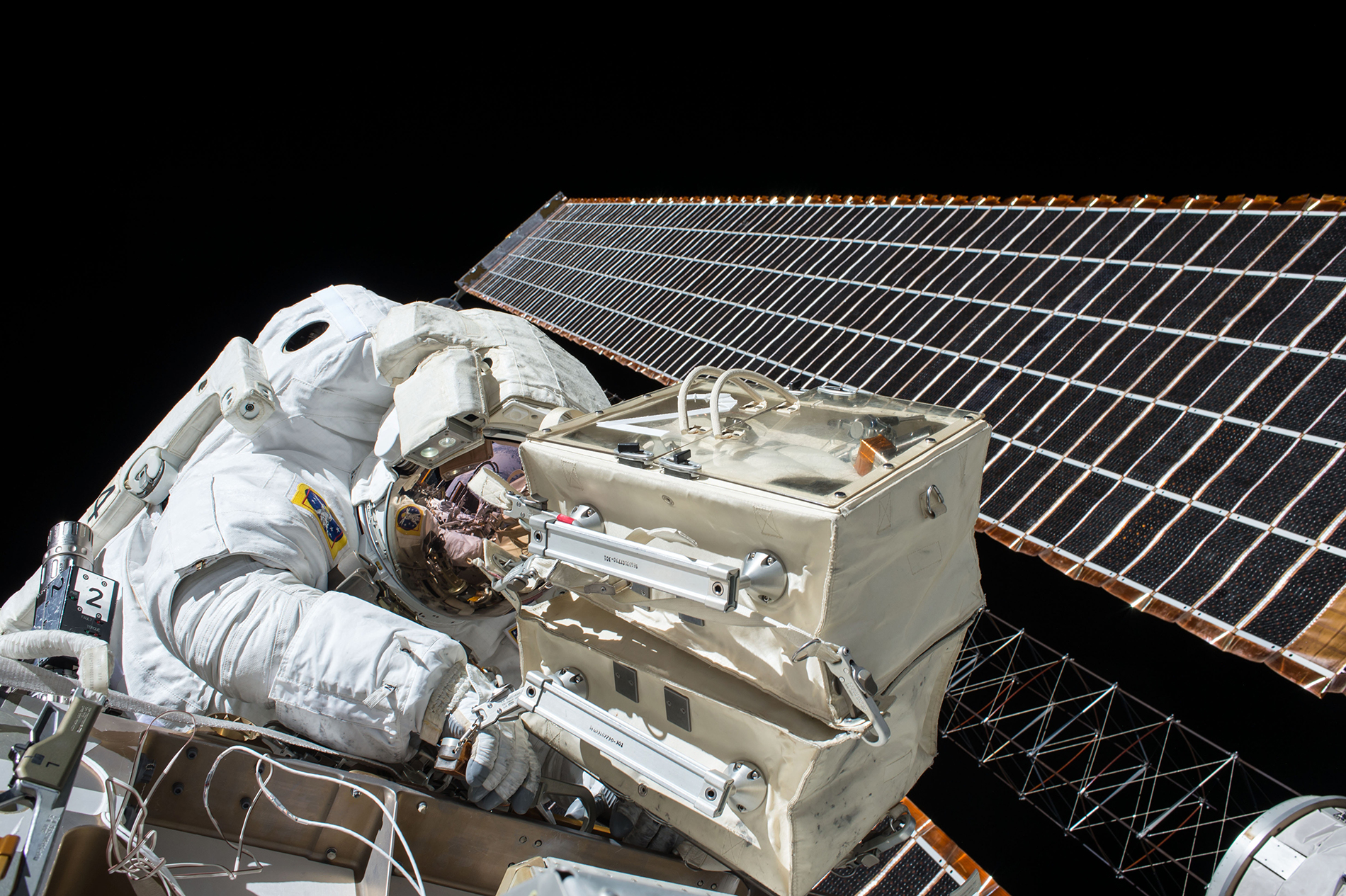 To go places and do things that have never been done before – that’s what living is all about.
The mission continues. The five-year missions have turned into decades of research, and the goal remains: to explore strange new architectures, to seek out new forms of intelligence, and to never settle for the status quo.